Opens in a new tab

Light To Night 2026 – Video Mapping Projection

Brand
National Gallery Singapore
Client
Ngoc Nau
Service
Video Mapping Projection

The story behind the video mapping projection for Light To Night 2026 at National Gallery Singapore.

Challenge

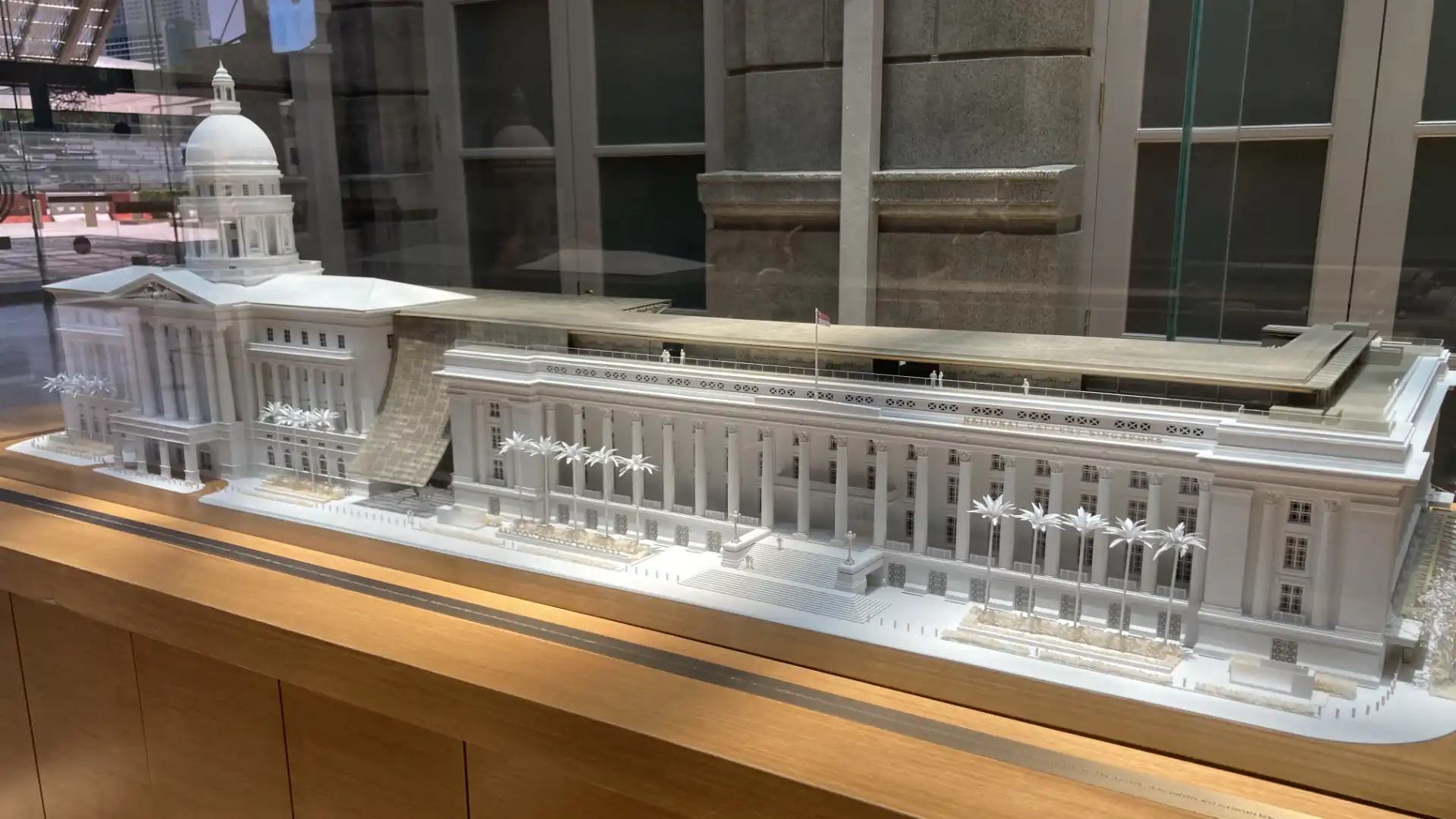
National Gallery Singapore is a well-known heritage building — a former Supreme Court and City Hall in one. Its architecture makes it a great surface for video mapping projection, but also a tricky one to work with.

Heritage façades are unforgiving surfaces: There are columns and arches all over the building. If the projection is even a little off, it shows — and at a live public event, we don’t have chance to fix it once the show is running.

The façade file needed redrawing: The client gave us a 3D model and a façade file. The façade file matched the building, but it wasn’t set up for animation — the sections weren’t split in a way that let motion move properly across the surface. Part of our job was to redraw the façade from the 3D model to make it work for production.

We worked remotely: We were based in Ho Chi Minh City while the event was in Singapore, we had to plan around that distance from the start.

Solution

Site-check before locking the design: Relying on the file is too risky, so we arranged a site visit to photograph the building in person — from the projector positions, under the actual lighting. Those photos showed us details the 3D model didn’t, like how the surface really looks and how light falls on it.

Redraw the façade before starting the artwork: Since the file we were given wasn’t ready for animation, we re-split the façade by hand, using the 3D model as a guide and following the building’s real structure. This gave the rest of the work a solid base to build on.

Design the visuals around the architecture: The building came first. The backgrounds, characters, and effects were all shaped by the proportions and detail of the façade, so they would work with the architecture rather than cover it.

The making of Video Mapping Projection

Scouting

The work starts before we open any software.

We got the 3D model and façade file early on. They were useful, but they weren’t 100% the same as seeing the building. FYC member went to Singapore to survey it in person – photographing the façade from the projector positions and noting the real conditions: the lighting, the surface material, anything in the way, and how the projectors lined up with the building.
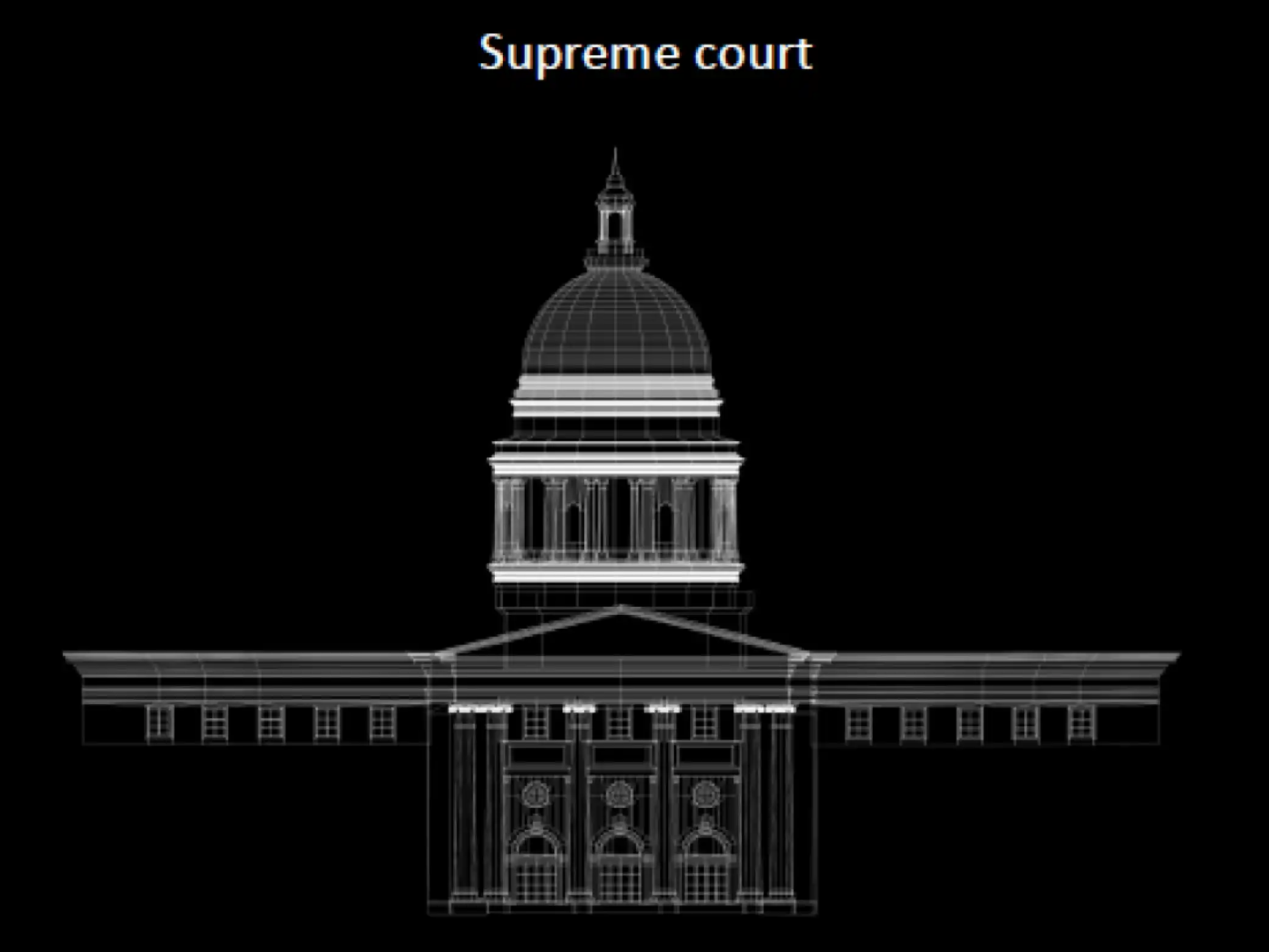
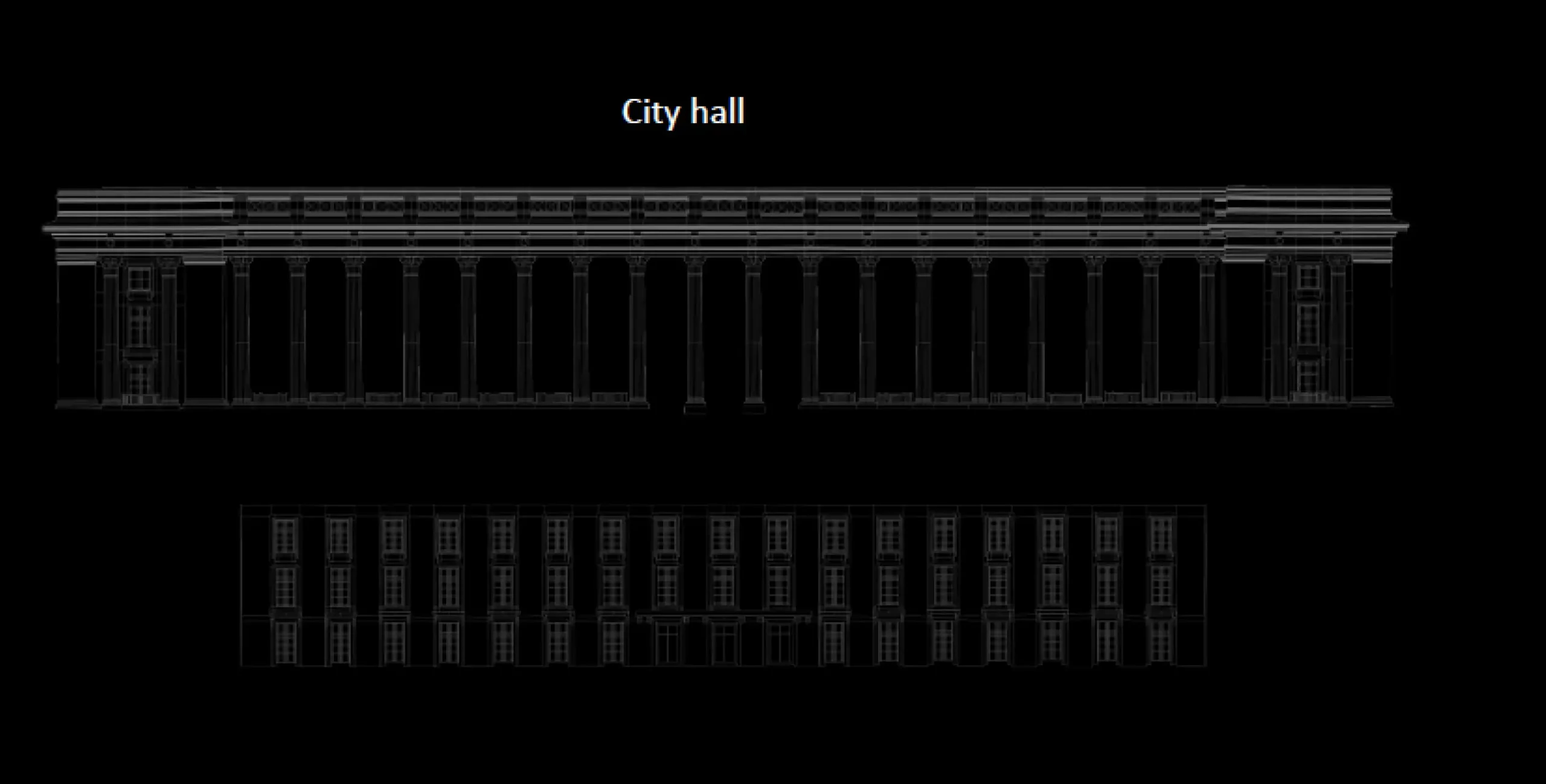
Building 3D Models
Client-provided façade file of the Supreme Court building for the Light To Night 2026 video mapping projection
Client-provided façade file of the City Hall building for the Light To Night 2026 video mapping projection
Building Façades

Those photos became a main reference for the project. Things that look simple in a 3D model — how deep a ledge is, how an arch curves, how a column casts shadow — behave differently once you project light onto them. Sorting these out during scouting helped keep our later work in Ho Chi Minh City close to the real building.
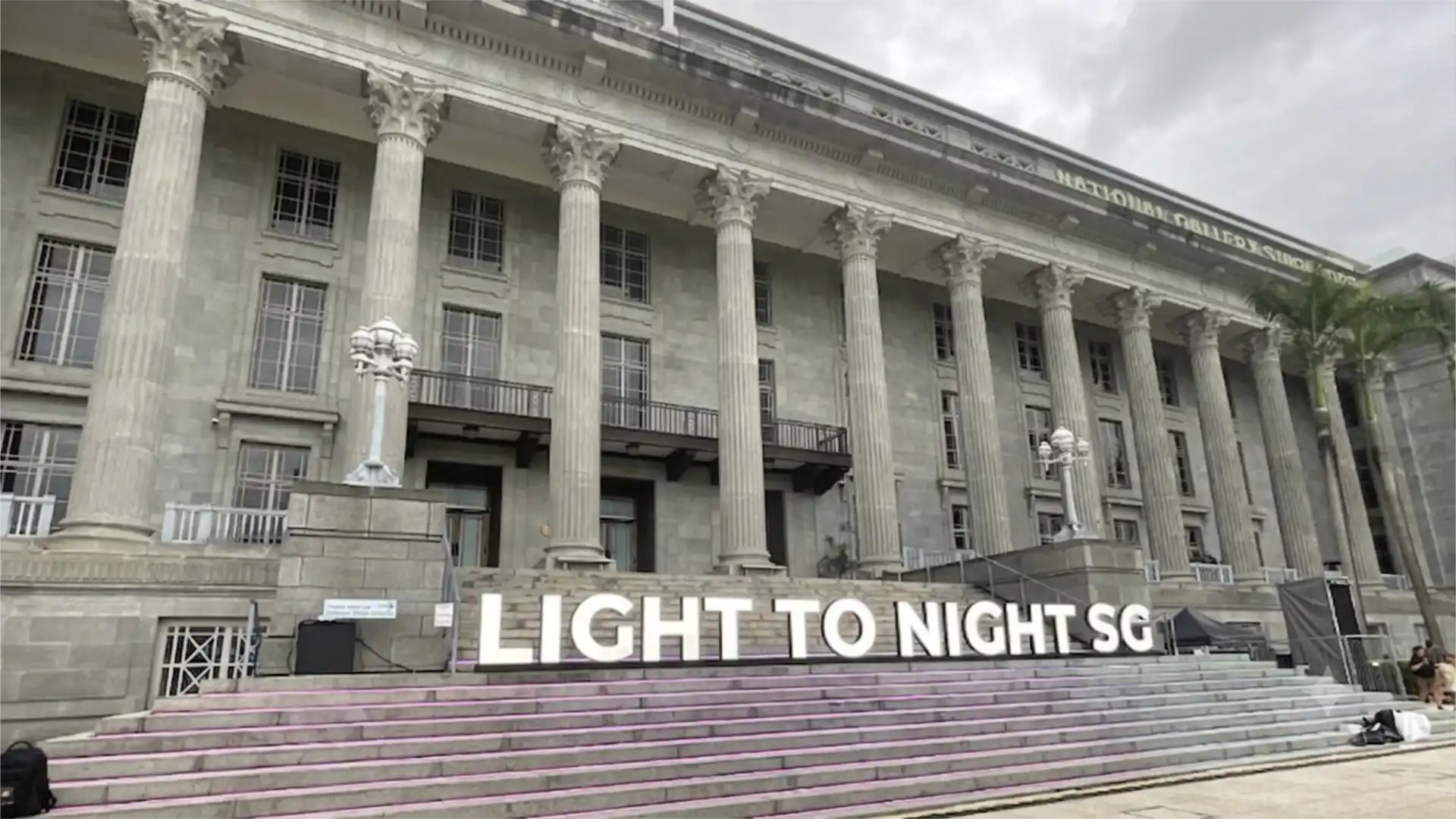
On-site scouting photo of National Gallery Singapore's façade taken during pre-production for the Light To Night 2026 video mapping projection
Scale model of National Gallery Singapore showing both the Supreme Court and City Hall wings, photographed during scouting for the Light To Night 2026 video mapping projection

Visual Design

Redrawing the Façade

The façade file the client gave us matched the building, but it wasn’t set up for animation — the sections didn’t follow the building’s shape in a way that let motion move naturally across it.

So before starting the design, we redrew the façade from the 3D model, splitting it by hand into sections that matched the architecture. Columns, arches, horizontal bands, and recessed panels each became their own area. This gave us the map the animation would follow later — where motion could flow, where it should stop, and where one scene would move into the next.

It’s a step that’s easy to overlook, and one we found worth getting right early.

Designing the Environments and Characters

With the façade mapped, we kept to a simple rule: each element should work with the building rather than against it.

The design of Medusa character for video mapping projection

The 2D and 3D backgrounds were built around the building’s proportions. The foreground pieces — including a 3D character — were sized and placed to fit the façade’s shape. The 2D and 3D particle effects were made to follow the building’s lines rather than hide them.

The idea was for the projection to feel like part of the building — as if the architecture itself were moving — instead of a video sitting on top of it.

Animation

3D Character Animation

We animated the 3D character to move in relation to the building — framed by columns, passing through arches, and sized to the real proportions of the façade. Instead of animating the motion on its own and placing it onto the building afterward, we designed it for this specific façade.

Physics Simulation

The physics simulations — particles and destruction effects — were set up to move naturally at the building’s scale. At this size, small issues in the motion become easy to notice, so we tuned the simulations until the movement felt right.

Destructive physical simulation of building columns

2D Motion Graphic

The 2D motion graphics handled the transitions between scenes and supported the overall flow. These were tied to the façade sections we mapped earlier, so the timing and movement stayed aligned with the building throughout.

2D Particle motion graphic on Supreme Court

Result

Light To Night 2026 was a public art event — the kind of project measured by attendance and word of mouth rather than analytics. We don’t have conversion figures to share, which is normal for this kind of work.

What we can share: National Gallery Singapore was happy with what we delivered, and the artist we worked with found the process an enjoyable one, later sending an extra payment without us asking. For a project that’s live, public, and can’t be redone, we took that as a good sign.

Planning a Projection Mapping Project?

If you’re an artist or event agency planning a projection mapping project, we’d be glad to talk about how we might help.

Let's Create Outstanding Visual!